Friday, August 20, 2010

Gay Vomit Sex - Antithesis (2010)

| Harsh Noise |

A short, fast and tasty new album by the dada-est musician around, Antithesis (which may be considered his debut, even though he has recorded and released a few others by himself) is a more "musical" adaptation of earlier GVS. It carries less nihilism than its precedents, focusing on harsh noise alone. Yet, it's the most consistent of all his works.

The album works almost like one big track, even though it's "split" (and each "part" was recorded separately). It kickstarts in a haste that is kept through its entirety. Loud, ferocious and somewhat funny (even though it's GVS less humoured work so far), there are really few moments of relief amidst the spiked improvisations of Antithesis. Very recommended for those willing to have more gay music in their library, and vomit in their breakfast. Unfortunately, it has the opposite effect on sex...

Catalog: VB-31 (Velvet Blue Records)
On Last.fm
Download (320kbps)

Thursday, July 29, 2010

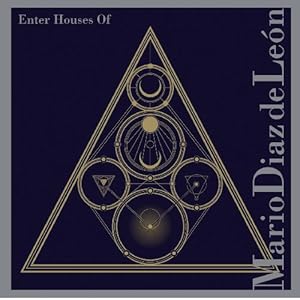
Mario Diaz de Leon - Enter Houses Of (2009)


| Avant-Garde | Contemporary Classical | Electroacoustic |


"The album is sealed by “Gated Eclipse”. The pedestrian dulcis in fundo commonplace would be appropriate enough, hadn’t the excellence of the preceding material already alerted about this man’s potential. A complex combination of effective sharpness and poignant stability is generated by a magnificent sextet – flute, clarinet, piano, percussion, violin and cello – tuning the music to impenetrable auras while leaving us catch a vague glimpse of superior levels of understanding."
-Touching Extremes

".....this disc has especially stood out for me in the way it fires my imagination and how frequently I replay it. Sure, the compositions are fascinating, painting in big aural strokes and melding major electronic ideas and acoustic performances with an assured hand. And the musicians—all ICE players—turn in the kind of technically and artistically daring performances on which the ensemble built its reputation. But there is something elusive in the "man and machine" conversation inside this music that digs its claws deep into the ear and invites repeat visits."
-New Music Box

"exquisite, arresting....an extraordinarily visceral experience, a statement of all the tonal and atonal possibilities of sound that still go untapped by the majority of other modern composers. Diaz de Leon's work, in contrast, is bracing and invigorating, a study in harsh beauty that broadens the horizons of classical composition."
-Impose Magazine

Catalog: #8065 (Tzadik)
Download (320kbps)

Tuesday, July 27, 2010

John Zorn - The Bribe (1998)

| Avant-Garde | Experimental Rock | Avant-Jazz |
| Post-Bop | Fusion Jazz |

John Zorn's Bribe is a continuation and extension of his album Spillane. Like its predecessor, this album features almost the same lineup of extraordinary NYC improvisers including pianist Anthony Coleman, drummer Bobby Previte, organist Wayne Horvitz, turntablist Christian Marclay, and harpists Zeena Parkins and Carol Emanuel. Unlike the fast-spliced pace of Spillane, which functioned as its own narrative, the music on Bribe is allowed to stretch and develop because it was composed as a background for the dialogue in three 30-minute radio plays by Terry O'Reilly (it was later adapted to a stage production). O'Reilly described his creation as "low art; " along the lines of little respected categories such as pulp fiction and B-movies. Zorn then constructed appropriate music, continually switching styles and filling it with pop references.

The overall mood of Bribe is also different from Spillane and much of Zorn's work (excluding Film Works, Vol. 7), in that it maintains a light-hearted approach, weaving music box chimes and carnival sounds into the music. A nicer mood pervades this release, yet given its kaleidoscopic and slightly demented tone, it certainly can't be described as relaxed. Then again, maybe "relaxed" isn't too far off, after all -- perhaps by playing a supporting role to the production's cast instead of driving the concept, the musicians were able to enjoy themselves a little more.

Catalog: TZ 7320 (Tzadik)
Album Overview on Allmusic

On Last.fm
Download (256kbps)

John Zorn - Godard/Spillane (1999)

| Avant-Garde | Experimental | Avant-Jazz |Post-Bop|
| Experimental Rock | Musique Concrètre |

"Godard" and "Spillane" were the two first (and purest) examples of the "file card" composition technique developed by John Zorn and inspired by theater director Richard Foreman. The compositions were constructed from independent scraps of music inscribed on file cards; the two principal works here called for assembly of the cards ("Spillane" used 60 cards within roughly 25 minutes) to create compositions within the conceptual frame of work by Mickey Spillane and Jean-Luc Godard. The goal was to translate imagery from Godard's films and Spillane's crime novels (and probably the films based on those novels) into unified compositions. Bits of text weave through musical fragments including gentle lounge piano, spacy electronic music, violent sonic crashes, and dive-bar jazz. Ironically, "Godard" and "Spillane" both work as unified compositions because they are made of fragments. The ideas of the filmmaker and the writer would have been too complex to be tackled by an overblown, operatic score; such a work could only scratch the surface of a few of their ideas without seeming disjointed. But Zorn's file card snippets bounce around like thoughts, overlapping and intruding on each other, reversing direction like a changed mind. Careful selection and arrangement make all the snippets seem essential and irreplaceable, despite their remarkable diversity.

This album's execution is aided by a truly impressive cast of supporting musicians, whose close relationships with Zorn made it possible for the musical nuances to be communicated through interpersonal interaction. As a result, every piece sounds like a pure fragment of its genre instead of mere imitation. Perhaps most impressive were the contributions of Anthony Coleman and Bill Frisell, both of whom wrenched an amazing variety of sounds from their instruments. This collection, issued by Tzadik in 1999, also contains a delightful Christmas song, "Blues Noël," which applies the file card method in a much shorter, but charming, piece.

Catalog: TZ 7324 (Tzadik)
On Last.fm
Download (224VBR)

Monday, July 26, 2010

John Zorn - Music Romance Vol.2: Taboo And Exile (1999)

| Avant-Garde | Jazz Fusion | Chamber Jazz |
| Avant-Classical | Experimental Rock | Avant-Jazz |

Like the first volume of the series, Music Romance, Volume Two: Taboo and Exile deals with issues of lost innocence. The first of the Music Romance series had more overt references to childhood, with lengthy literary references and a title which gave it all away: Music for Children. Here the images are a little bit more subtle and a lot darker. The outer sleeve is black, with ritual objects represented in the fiery colors of orange and red. The liner notes contain a photo of poppies as well as more ritual objects, including one which seems to be bathed in blood. The front of the booklet has a photograph of a naked young girl that presents her in a way that is half sexualized, half innocent. There is just one piece of text this time, "A white room with white curtains hides the face of a sleeping child, barely a child, barely asleep, leaving nothing but an image, the sky's double, to rediscover one's innocence."

All of this is mere packaging -- a name, some images, some words, but they prime the listener for the experience of the music, for understanding what this recording is all about. And what it is all about is that painful moment between innocence and experience, that blood-filled time where the world cracks and reforms itself, when a line has been or is being crossed. The music itself is achingly beautiful -- the first track, "In the Temple of Hadjarim" sets a hypnotic mood for the rest of the album, with the sensual piano playing of Jamie Saft wrapped up in the atmospheric strings of Mark Feldman, Erik Friedlander, and Greg Cohen. By the second track, things have turned discordant, aided by Fred Frith, Dave Lombardo, and Bill Laswell. Indeed, the list of talented musicians on this project is enormous, which lends itself both to quality and diversity of sound. This is not a piece of classical movements; rather, it is like a film with constantly changing scenes. Before the end of the album, images are evoked of slow, metered tribal ritual, escape on an open road, cabaret, desert and dance. This is one of Zorn's most complex and beautiful pieces, showing that he is still constantly evolving as a composer.

Catalog: TZ 7325 (Tzadik)
Album Overview on Allmusic
On Last.fm
Download (224VBR)

John Zorn - IAO (2002)

| Avant-Garde | Experimental | Avant-Classical |
| Minimalist
| Death Metal |

This album, a studio suite, is wrapped in mysticism. The four cards that serve as a booklet feature cabalistic signs, esoteric diagrams, a quote from Alaister Crowley and a dedication to esoteric filmmaker Kenneth Anger. A short note by John Zorn establishing a parallel between the tools and craft of musical composition and magic is the only given explanation. The aura of mystery invites an analysis of the constituents and structures of the work, for better or worse -- and in any case it's fun to do on your own, so this reviewer will not expose his personal conclusions on the subject.

The musicians involved are Cyro Baptista, Jennifer Charles, Greg Cohen, Beth Hatton, Bill Laswell, Rebecca Moore, Mike Patton, Jim Pugliese, and Jamie Saft. They appear only one, two or three at a time. Each of the seven movements is based on a specific, non-reoccurring instrumentation, and explores a form of meditation, trance or anything possibly leading to spiritual revelation. "Invocation" is a delicate piece based on organ drones, while the 13-minute "Sex Magick" takes the form of a tribal percussion mantra. The piano melody in "Sacred Rites of the Left Hand Path" provides the most soothing moments and together with the first track is reminiscent of the level of writing found in Duras. "Lucifer Rising" is made of overdubbed sensual female vocals, while "Leviathan" serves up an ear-splitting slab of death metal (which can be a source of trance too, you know). "Mysteries" completes the circle with electric piano and light percussion. "Leviathan" aside, I.A.O. makes a calm, enjoyable listen and beyond its mystical claims, it includes some strong compositions.

Catalog: TZ 7338 (Tzadik)
Album Overview on Allmusic
On Last.fm
Download (192kbps)

Friday, July 23, 2010

John Zorn - Music Romance Vol.1: Music For Children (1998)

| Avant-Garde | Experimental Rock | Jazzcore |
| Avant-Classical |
Experimental | Electro-Acoustic |

There has never been a CD quite like Music For Children. The first installment of Zorn’s challenging and controversial Music Romance trilogy (that includes Taboo and Exile and The Gift) it is easily one of the most eclectic CDs ever made. The Music Romance trilogy is a kind of ecletic mixture of unusual genres for the lovers of music in all its mutations.

The music in the first volume includes three short Torture Garden compositions performed by Zorn with the scorching hardcore band Prelapse; a soulful piece of Masada exotica; a virtuosic classical chamber piece for violin, piano and percussion; a poly-rhythmic etude for voice and percussion and a charming nostalgic lullaby for music box. The highlight of this re-release is a revised version of Zorn's infamously epic ear-bender Cycles du Nord, which takes on new intensity through overdubbed bass drums and a newly recorded noise guitar track by none other than the master of feedback himself—Lou Reed! Intensely intriguing, Music For Children is an unbelievable musical roller coast ride that takes you from the sublime to the ridiculous and back again in sixty jam-packed minutes.

Catalog: TZ 7321b (Tzadik)
On Last.fm
Download (192kbps)

Wednesday, July 21, 2010

Gorguts - Obscura (1998)

| Technical Death Metal | Avant-Metal |

What's in a name? In the case of "Gorguts," not much -- at least by this stage in the game -- save for some preconceptions about what a band with "gore" and "guts" in its name should sound like. Obscura comes much closer to the mark, as this is simply one of the most challenging, difficult albums ever released within the metal genre. In terms of its towering complexity and unprecedented strangeness, Obscura has a lot more in common with Captain Beefheart's avant-rock monstrosity Trout Mask Replica than it does the latest Cannibal Corpse release. Not that Obscura isn't recognizably metal -- the guitar distortion, the double-bass drumming, and the blasting snare beats are all firmly rooted in death metal. What makes this album different is exactly how far Gorguts pushes this death metal foundation. The guitar/bass harmonies are extremely discordant, the guitar leads are full of alien harmonic squeals and other foreign noises (the title track, for example, features a recurring, legitimately atonal melody played via fingertapping), and the drums change tempos and time signatures in spastic, whiplash-inducing fashion. Frontman Luc Lemay's vocals are not standard death metal fare, either: he sounds like he's being put through a torture session, gasping and wheezing as he screams at the top of his lungs. The most agonizing track is the near ten-minute "Clouded," which crawls at a Melvins/Swans pace and has absolutely guttural bass playing to go along with the aforementioned dissonant guitars and painful vocals. As ugly and off-putting as Obscura may initially seem, though, it possesses an underlying sense of logic and structure that does reveal itself upon repeat listens. A number of memorable, if strange, guitar melodies emerge throughout the album and help provide a sense of order and thematic unity amidst the apparent chaos; "Earthly Love" and "Nostalgia" are especially strong examples of this. Obscura's appeal may not ultimately reach far beyond an underground niche audience, but those with the patience and curiosity to tackle this record will be rewarded with a work of great depth and vision.

Catalog: 008 633 129-2 (Olympic)
Download (320kbps)

Naked City - Grand Guignol (1992)

| Avant-Garde | Jazzcore | Experimental Rock |
| Avant-Classical |

"Unlike some of Naked City's other albums, this could hardly be qualified as a rock or jazz album. In the liner notes Zorn talks about how humanity has a dark side, symbolized by the Grand Guignol, a Parisian theatre that "served up torture, incest, blood lust, insanity, mutilation and death to generations of fervid spectators." The album is Zorn's exploration of our fascination with evil.

The album opens with a series of eloquent and sinister classical pieces. The first, Zorn's "Grand Guignol" is a series of avant-garde vignettes, drums and tortured guitars against a backdrop of silence. It is similar to "American Pyscho" on Radio, except it lacks the cultural references to rock and pop. The rest of the pieces drift along, subtle and dark classical covers performed by a rock quintet. Frisell's eloquent reverby guitar is used to good effect here, as is Fred Frith's use of the volume pedal to float his electric bass in and out of the song. This is some of the most understated and beautiful playing Naked City has ever done.

They are sharply contrasted by the onslaught of tracks 9-41. These tracks make up the other half of Torture Garden, the first half released on Naked City's debut album. They are a brutal, in your face assault of genres augmented by Yamatsuka Eye's ferocious screams, yells and grunts. The material is, in a word, insanity.

This is one of my favorite Naked City albums. It is both dark and contemplative and upbeat and disturbing. This album should appeal to anyone interested in new ways of structuring music who doesn't mind some pretty insane sound. It should also appeal to anyone who enjoys thrash or hardcore music.

PS: This is the remastered version of the album, which includes "Grand Guignol (Vocal Version)", with awesome vocals by the genius Mike Patton!

Catalog: Avan 002 (Avant)
On Last.fm
Download (ALAC)
Download (320)

Monday, July 12, 2010

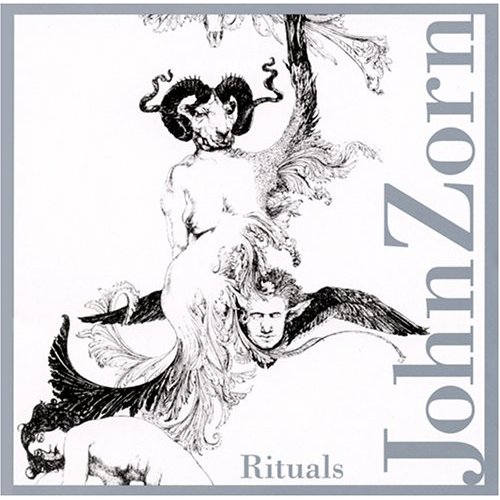
John Zorn - Rituals (2005)

| Avant-Garde | Contemporary Classical |
| Experimental |

Owls, Windmachines, Gravedigging and Ritual Magick, Zorn’s strange and mystical monodrama for mezzo soprano and ten instruments is presented here in a beautiful new studio recording. Composed for the Bayreuth Opera Festival in 1998, the Rituals premiere was a bit of a scandal, with the audience split down the middle…half outraged detractors, stomping out, whistling and jeering and half cheering supporters. Performed here by a stellar group of Zorn regulars and some very special guests, Rituals is opera at its virtuosic and intimate best. Five movements of magic and alchemy from the crucible of an uncompromising and unpredictable musical maverick.

This album is a total YES, from beginning to end. The music, full of druidism and wizardry, is another of Zorn's classical compositions exploring the magic of sound. This one is less dark and frightening than Magick, yet it goes way further on the path; having ten instruments and opera singers makes Rituals a completely new statement in Zorn's catalogue. The "rituals" are five short pieces, from 7 to 4 minutes. They are little melodic, since they will is to deep-explore the magic connection between each instrument's sound (instead of simply "connecting" them). Yet, the compositions here are really stunning. In a certain way, if Magick was black magic, Rituals is druid's alchemy!

Catalog: TZ 8011 (Tzadik)
On Last.fm
Download (192kbps)